Sources of this article-Buffett success
This article describes several key factors to Buffett success: Charlie Munger made a very important speech at the beginning of the 2007 Weisco shareholders’ meeting and the Q&A discussion with shareholders. As the person who knows Buffett best and his lifelong business partner, there is no doubt that Munger understands Buffett better than anyone else. I personally think that Munger’s analysis is very in-depth and well worth the investment of reading it, and carefully savoring the implications of Munger’s original remarks.
Note: The part of this article in italic text comes from Munger.
Open Remarks
I want to do something I haven’t done before. I feel obligated because so many of you came from such great distances, so I’ll talk about a question I’ve chosen, one that ought to interest you: Why were Warren Buffett and his creation, Berkshire Hathaway, so unusually successful? If that success in investment isn’t the best in the history of the investment world, it’s certainly in the top five. It’s a lollapalooza.
Why did one man, starting with nothing, no credit rating, end up with this ridiculous collection of assets: $120 billion of cash and marketable securities, all from $10 million when Warren took over, with about the same number of shares outstanding. It’s a very extreme result.
A confluence of factors in the same direction caused Warren’s success. It’s very unlikely that a lollapalooza effect can come from anything else. So let’s look at the factors that contributed to this result:
Mental aptitude
The first factor is the mental aptitude. Warren is seriously smart. On the other hand, he can’t beat all comers in chess blindfolded. He’s out-achieved his mental aptitude.
Start very early
Then there’s the good effect caused by his doing this since he was 10 years old.
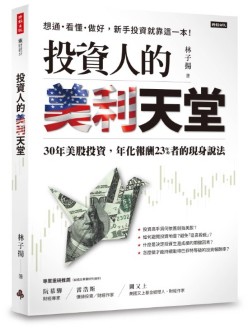
Note 1: I mentioned in my book “The Rules of Super Growth Stocks Investing“: Jim Simons, the greatest master of quantitative investment in history. Simons’ annualized return on his career investments is more than twice that of Buffett (Buffett’s annualized return over his entire 59-year investment career from 1965 to 2023 was 19.8%). But why is Buffett much richer than Simons? The reason is that Buffett’s investment career is far longer than Simons, and much longer.
Note 2: During these 36 years, even after deducting the high expenses, Jim Simons achieved an astonishing annualized return of nearly 40%. This is the best performance of any investment guru known today. For this Jim Simons, please refer to my previous posts: “”The career annualized return on investment of top investment masters: Buffett, Simons, Lynch, Dalio, Keynes, Munger, Soros, Miller, Karaman“.
Note 3: Buffett’s career annualized investment return rate is close to 20% by the end of 2023, but this is because Buffett started investing when he was less than 20 years old, Jim Simons started investing at the age of 43, which is why Buffett’s current assets of US$133.7 billion far exceed Jim. Simmons $31.8 billion.
Note 4: About Jim. Simons, please refer to my posts: “Jim Simons, the lord of quantitative investing” and “The quant’s must-read book for Jim Simons “The Man Who Solved the Market”.
Strongly interested in
It’s very hard to succeed until you take the first step in what you’re strongly interested in. There’s no substitute for strong interest and he got a very early start.
Best learning machines
This is really crucial: Warren is one of the best learning machines on this earth. The turtles who outrun the hares are learning machines. If you stop learning in this world, the world rushes right by you.
Warren was lucky that he could still learn effectively and build his skills, even after he reached retirement age. Warren’s investing skills have markedly increased since he turned 65. Having watched the whole process with Warren, I can report that if he had stopped with what he knew at earlier points, the record would be a pale shadow of what it is.
Concentrate decisions and process in one person
The work has been heavily concentrated in one mind. Sure, others have had input, but Berkshire enormously reflects the contributions of one great single mind. It’s hard to think of great success by committees in the investment world – or in physics. Many people miss this. Look at John Wooden, the greatest basketball coach ever: his record improved later in life when he got a great idea: be less egalitarian. Of 12 players on his team, the bottom five didn’t play – they were just sparring partners. Instead, he concentrated experience in his top players. That happened at Berkshire – there was concentrated experience and playing time.
This is not how we normally live: in a democracy, everyone takes turns. But if you really want a lot of wisdom, it’s better to concentrate decisions and process in one person.
Reinforcement
All human beings work better when they get what psychologists call reinforcement. If you get constant rewards, even if you’re Warren Buffett, you’ll respond – and few things give more rewards than being a great investor. The money comes in, people look up to you and maybe some even envy you. And if you buy a whole lot of operating businesses and they win a lot of admiration, there’s a lot of reinforcement.
Learn from this and find out how to prosper by reinforcing the people who are close to you. If you want to be happy in marriage, try to improve yourself as a spouse, not change your spouse. Warren has known this from an early age and it’s helped him a lot.
Trust
Also, an enormous pleasure in life is to be rightly trusted. One of my kids was a
computer nerd and his school gave him access to the entire school computer system. He was exultant by the extreme trust. If your friends are asking you to raise their children if they die, you’re doing something right. It’s wonderful to be trusted. Some think if we just had more compliance checks and process, virtue would be maximized.
At Berkshire, we have subnormal process. We try to operate in a web of seamless trust, deserved trust, and try to be careful whom we let in. They act like this at the Mayo Clinic. Imagine if they didn’t. Most patients would die.
Related articles
- “Seven key factors contribute Buffett success“
- “Buffett archive, meetings, and quotes“
- “Primer’s book to know Buffett-“Warren Buffett: Investor and Entrepreneur”“
- “Why Buffett deserves further study“
- “The commonalities of Buffett portfolio – cheap, fixed income, repurchase“
- “What helps Buffett to get his investment idea?“
- “Imitating great investors is the fastest and most effective way“
- “How to research successful investment masters?“
- “The career annualized return on investment of top investment masters: Buffett, Simons, Lynch, Dalio, Keynes, Munger, Soros, Miller, Karaman“
- “The Chronicle of Buffett Partners “Warren Buffett’s Ground Rules“
- “How Buffett Structures His Long-Term Investment Portfolio“
- “Possibility of long-term holdings, Deep dive on Buffett’s case“
- “People believe successful investors are survivorship bias cannot succeed“
- “Jim Simons, the lord of quantitative investing“
- “The quant’s must-read book for Jim Simons “The Man Who Solved the Market”“
Disclaimer
- The content of this site is the author’s personal opinions and is for reference only. I am not responsible for the correctness, opinions, and immediacy of the content and information of the article. Readers must make their own judgments.
- I shall not be liable for any damages or other legal liabilities for the direct or indirect losses caused by the readers’ direct or indirect reliance on and reference to the information on this site, or all the responsibilities arising therefrom, as a result of any investment behavior.