Think opsite way
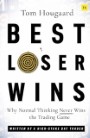
This weekend I read a book called “Best Loser Wins“. As the central idea of the book, the author repeatedly emphasized a sentence in the book: “You don’t need to think like the 1% of people who succeed in investing. Just avoid thinking like the 99% of people who fail in investing.” After thinking over this sentence carefully, I feel that it makes a lot of sense.
Most investors lose money
European law requires securities brokers to disclose their clients’ profit and loss ratios. According to the information obtained by the author in 2019:
- Data released by the five major European brokerage firms show that 74-89% of investors actually lose money.
- The situation is even worse for professionals, with 95% of traders losing money.
Reasons why losing money
The book lists what he knows, as well as the experiences and opinions of his peers or well-known traders over the past few decades. Here are some reasons why most investors lose money:
- The characteristic of a successful trader is that he will not try to find lows or highs; but most investors, especially retail investors, are particularly busy trying to find the lowest point or bottom of the stock price.
- Most investors, especially retail investors, are unwilling to stop losses. I wishfully believe that as long as the debt is not recognized and settled, it will not be considered a loss.
A large section of the book is based on an interview with a CEO in the industry who drew on his decades of experience. It’s well worth a read as the CEO lays out five key differences between investors who win and those who lose, and explains his thinking.
Pychology dominates
Everything you want exists between fears. Investors have missed the point. Only by overcoming inner fear can investment be successful. What doesn’t belong to you, even if you succeed temporarily and force it, you will eventually lose it.
In the book, the author mentions how Elon Musk deals with the fear of failure, as well as Musk’s views on and attitude towards failure, which are worth learning.
The author’s opinion is the same as what I posted four years ago: “Most investors’ problem is concept and psychology, not stock selection“
The nature of trading will never change
In the book, the author quoted an article published in a newspaper by Greg Coffey, a well-known London hedge fund trader. His views are actually consistent with my own article published four years ago: “Will the social network and fintech change stock investment?“
The report goes on to describe Cofffey as having absolute faith in his trades, even to the point of arrogance, but also being quick to humble himself when things weren’t going well.
Remember this: “It’s not what you know that kills you, it’s what you think you know.” But if it’s not actually the case, then that’s what will kill you.
The trading game never changes, and it won’t change in the future. Algorithms don’t change the nature of the trading game, and laws don’t change the trading game because it’s a heart game and you need to spend time (maybe not as much time as you spend on the charts, but lot of time still required). You still need plenty of time to think about what human qualities you bring to the trading game.
Only by understanding yourself and the market can you move in the right direction. The trading game never changes. Even if the people involved in the trading game suddenly change, we will all grow old, die, and be replaced by new blood.
A profound view
With more than 30 years of experience, the author and most investors, especially retail investors, have many unique views that are worth pondering:
- Over the past three decades, the Dow Jones Industrial Average has closed higher than the previous day only 50.4% of the time.
- People never go bankrupt by taking profits.
- The author advocates that there is no need to take profit.
- I have seen many people make money, but few can keep the money they earn.
- It’s not what you know that kills you, it’s what you think you know.
- Ignorance is defined as a lack of knowledge or information. You can be an smart person but be ignorant in certain areas.
Related articles
- “Best Loser Wins”
- ““A Random Walk Down Wall Street” is a must-read for US stock investors“
- “Great primer books for Investing in the stock market“
- ““One Up on Wall Street”, Peter Lynch’s great book for investing newbie“
- “Charles Ellis and his “Winning the Loser’s Game”“
- “Most investors’ problem is concept and psychology, not stock selection“
- “Will the social network and fintech change stock investment?“
Disclaimer
- The content of this site is the author’s personal opinions and is for reference only. I am not responsible for the correctness, opinions, and immediacy of the content and information of the article. Readers must make their own judgments.
- I shall not be liable for any damages or other legal liabilities for the direct or indirect losses caused by the readers’ direct or indirect reliance on and reference to the information on this site, or all the responsibilities arising therefrom, as a result of any investment behavior.