Reasons for the selloff
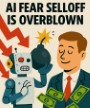
AI fear selloff is overblown since the beginning of this year. Almost all US-listed software stocks, regardless of their sub-sector, have been severely impacted this year. The main reasons, in order of relevance, are as follows:
- Anthropic’s series of Claude family products impressed investors, triggering the impact of AI on various industries and continuing to spread, causing a sharp drop in stocks across many sectors, including software. This is the primary reason.
- Hyperscale cloud service providers’ spending sprees eroded profits, causing investor resentment. This is a secondary reason.
- Large-cap tech stocks fell due to the race to invest in OpenAI’s $110 billion and Anthropic’s $30 billion latest funding rounds (valuing them at $730 billion and $350 billion respectively).
- The AI-related discussions continued, Trump’s tariff defeat, and the US-Israel attacks on Iran further exacerbated the volatility in the US stock market.
- Furthermore, the US stock market had been in a six-year bull market since the 2020 crash, and market valuations were already too high.
AI Still Dominates US Stocks
Anthropic Steal the thunder of OpenAI
Anthropic’s revenue growth has far outpaced OpenAI’s. Its innovative products, targeting key enterprise market needs, have stolen OpenAI’s thunder.
Anthropic’s strong performance over OpenAI is primarily due to its stable cash flow. Cash flow is projected to turn positive in 2028 (OpenAI’s in 2030), and its revenue is expected to triple this year, reaching a maximum of $18 billion (OpenAI’s $25 billion, but with potential losses of $14 billion). Next year’s revenue is expected to exceed $55 billion. This has caused its valuation to surge over the past year, attracting investment from prominent venture capital firms and tech giants.
Gemini Outperforms ChatGPT
OpenAI botched its latest ChatGPT model. Google’s Gemini model outperformed OpenAI in all aspects, securing bundled orders from Apple and Samsung mobile devices and significantly boosting its own revenue.
More critically, OpenAI is still burning through cash, its profit model is unclear, it cannot convince investors, its valuation is rising slowly, and it is impacting its IPO plans. Last year’s revenue was only $13.1 billion, with an annualized revenue of $20 billion (Anthropic already reached $9 billion in one year).
A series of setbacks has led investors to question the company’s profitability. The situation has forced OpenAI to drastically cut its previously promised $1.4 trillion spending target by 2030 to $600 billion.
Hyperscale CSP cash burn face backlash
Capital expenditures for hyperscale data center operators are projected to grow by 58% in 2026, reaching over $700 billion (see Appendix 1).
Currently, hyperscale data center operators are trading at less than 30 times their 2026 and 2027 free cash flow, while the seven major tech giants average over 95 times. In 2026, Microsoft’s free cash flow is projected to grow by 5%, while Nvidia and Apple are expected to achieve double-digit growth.
Capital expenditures for hyperscale data center operators are projected to grow by 58% in 2026, reaching over $700 billion. In contrast, software development on computers previously incurred approximately $300 billion to $400 billion in capital expenditure annually.
A recent report by Moody’s reveals that the five largest hyperscale data center operators have a combined $662 billion (equivalent to 113% of their debt) in future data center lease commitments.
Under current accounting standards, these are not considered current liabilities as they are not yet in effect and therefore do not appear on the balance sheet. However, as the leases take effect in the coming years and project owners fulfill their obligations, these liabilities will eventually be recorded on the balance sheet, at which point they will become apparent.
| Ticker | 2026 Expenditure (USD billion) | New Corporate Bonds (US$1 billion) | Total liabilities (US$ billion) | 2026 expected free cash flow |
| AMZN | 200(+50%) | 15 | 178.5 | Negative |
| GOOGL | 185(+100%) | 32 | 79 | Negative value or significant reduction of 90% |
| META | 135(+87%) | 30 | 58.74 | Negative |
| MSFT | 105(+66%) | NA | 123.3 | positive but reduced by 28% |
| ORCL | 50(+138%) | 20 | 130 | Negative |
| TSLA | 20(+134%) | NA | 14.72 | Negative |
| APPL | 14(+10%) | 4.5 | 90.51 | $119 billion |
| NVDA | 8.8(+159%) | 3.8 | 10.48 | $105 billion |
| TSM | 56(+80%) | 20 | 31.7 | $42 billion |
Table 1: Comparison of Capital Expenditures, New Corporate Bonds Issued, Liabilities, and Free Cash Flow of Mega-Scale Related Enterprises (Figures from each company)
Semicon and magnificent 7 Stock Performance
Semiconductors Dominate
The AI boom sparked by ChatGPT three years ago continues unabated. The reason is simple: this AI wave is built on a large-scale model where competition is fierce. Large models require computing power, and computing power requires building a huge cloud center. It’s that simple. To seize market share and defeat rivals, companies have had to repeatedly double their capital expenditures, investing heavily in building AI computing power.
Those who have profited immensely include semiconductors, servers, communications connectivity, data centers, and even the power and energy industry—all tangible infrastructure sectors. Many companies previously considered traditional industries, with price-to-earnings ratios consistently below ten, have seen their stock prices rise several times over, becoming market darlings.
East Asian stock markets have repeatedly hit new highs this year, seemingly unaffected by the shift in the US stock market and the significant impact of AI on US software stocks. The main reason is that semiconductors are the main export and stock market driver for East Asian countries, unlike the more evenly distributed industry distribution in the US. Furthermore, software stocks represent a negligible proportion of the East Asian stock market.
In stark contrast, the semiconductor industry, represented by TSMC, Samsung, SK Hynix, Applied Materials, and Lam Research, has seen its stock prices repeatedly reach new all-time highs, with no end in sight in the short term.
Magnificent 7 underperformed over the past year
The seven major tech stocks fell approximately 4.9% in the first two months of this year, while the S&P 500 components excluding these seven stocks rose 2.9%.
Except for the letters in the alphabet, the seven major tech stocks have seen almost stagnant performance over the past year, even underperforming the broader market; the sole reason is AI. Investors have begun to question whether Nvidia’s clients’ continued high-risk investments can generate profits.
Nvidia delivered record-breaking financial reports and impeccable outlooks, but market doubts about the sustainability of the AI boom led to a sharp drop in its stock price, which has only slightly declined year-to-date.
Apple, by not joining this capital expenditure war, has become a safe haven for funds, but the developments of its AI-integrated Siri still dominate its stock price fluctuations.
Alphabet was the only stock to stand out in the AI sector over the past year, boasting the best performance among the seven major tech stocks. However, its share price has been declining this year, largely due to capital expenditures eroding profits.
Microsoft, Amazon, and Meta’s share prices have been weighed down by astronomical capital expenditures.
Tesla’s share price has become decoupled from its core business in recent years, depending on whether investors believe in Musk’s vision of humanoid robots and self-driving taxis, and whether it benefits from SpaceX’s high-profile IPO this year.
The market is not rational
AI’s capabilities are exaggerated
A recent report from CodeRabbit shows that AI-generated code has an error rate approximately 60% higher than human-written code, consistent with many other observations. Worse still, as the coding work performed by AI becomes increasingly complex, finding and correcting these errors becomes increasingly difficult.
Especially this year, AI has severely impacted US software stocks. The AI panic that erupts every few days has spread from software to cybersecurity, financial services, real estate services, logistics, and transportation. Investor concerns and numerous doubts have justified the stock price correction.
However, overall, this sell-off is largely a typical example of herd mentality, as many stocks have been clearly oversold. Investors should calmly and carefully screen these heavily sold-off software stocks; many are unlikely to disappear due to AI. For example, Microsoft will have a continuous cash flow as long as people work. Many stocks believed to be disrupted by AI are actually using AI as a tool in their operational processes, which will be simplified or even disrupted. The benefits of AI are real, but the core business value of a company cannot be replaced by AI.
Industries That Cannot Disappear Due to AI
No matter how human civilization develops, people will always need to buy daily necessities and groceries, which is one of the reasons why Walmart recently achieved a market capitalization of one trillion US dollars.
The healthcare industry is the highest-grossing single industry in the US. People get sick and need hospitalization and medical care; this industry will only thrive in the future due to an aging and declining birth rate, and it’s unlikely to disappear.
Goods will always circulate in the world. Human resources and processes will be optimized, but logistics and delivery companies will not disappear.
AI cannot create a smartphone—an essential device deeply integrated into modern life—or a work computer out of thin air. This is one reason why Apple’s stock price hasn’t been severely damaged over the past year. Serious investors may have noticed that Apple’s stock performance has almost decoupled from the Nasdaq, which represents tech stocks, since last year.
The fintech industry will be repeatedly disrupted and replaced. Index investing and self-proclaimed automated wealth management will inevitably suffer, but banks will not disappear. Various financial trading platforms and related services will only grow larger.
Which stocks should investors abandon?
Amidst the AI panic, the market is now extremely jittery, with even the slightest disturbance triggering indiscriminate plunges in related industry stocks. These concerns and doubts are justified; a few companies, particularly those easily automated, may disappear. Humans possess advantages that AI cannot match in non-fixed patterns, unprecedented scenarios, and in human interaction and warmth.
However, most affected industries will not disappear. AI will act as a catalyst for industrial transformation, efficiency upgrades, and optimization, rather than a replacement. AI is merely a tool; some jobs will disappear, but more creative possibilities will emerge. The market’s plunge is utterly inexplicable; the AI panic has been exaggerated, and indiscriminate selling is illogical, especially given the high switching costs and customer workflow integration of enterprise software, making replacement difficult. It’s unnecessary to condemn all companies based on a single example, but the current state of the US stock market reflects human nature.
Over the past forty years, the US stock market has weathered major technological disruptions such as telecommunications liberalization, the internet, mobile communications, cloud computing, and e-commerce. Which of these didn’t trigger market panic? Ten years ago, Amazon’s retail stock often plummeted by more than 5% in a single day. According to research, in the 90 days following the release of Q2 2017 earnings reports, Amazon was mentioned 635 times by various listed companies in earnings calls and investor conference calls—far exceeding the 162 times they mentioned US President Trump and the 111 times they mentioned labor wages.
Ten years later, Walmart just became the tenth US company with a market capitalization exceeding one trillion dollars on February 10th, ranking 12th globally. Costco’s stock price broke through $1000, and both companies’ price-to-earnings ratios have long been between 40 and 50. However, many more brick-and-mortar retailers have indeed succumbed to bankruptcy; Macy’s and J.C. Penney are the most typical examples. Investors should abandon Macy’s, not Walmart!
Conclusion
Investors should seize the rare market correction opportunity within a year during the AI bull market, carefully selecting stocks that have experienced unreasonable price drops, buying on dips, and avoiding following the market’s lead.
Here is some example, please see the post of “Oversold software, moat weaken and should abandon“
I am the author of the original text, the essence of this story was originally featured on Money Magazine, Issue of April 2026
Related articles
- “How severe is the AI panic selloff in the begin of 2026? “
- “Top 10 AI corp CapEx, debt, and FCF“
- “Oversold software, moat weaken and should abandon“
- “AI fear selloff is overblown“
- “Tech giants’ AI strategy are shifting“
- “AI jeopardizes cash flow and profits“
- “AI job openings tripled in past five years“
- “How Much Does Generative AI Cost?“
- “Hidden Concerns Beneath the AI Frenzy“
- “Major artificial intelligence companies in US stocks market“
- “Artificial intelligence investment trap“
- “The artificial intelligence bubble in the capital market is forming“
- “OpenAI, the Generative Artificial Intelligence rising star and ChatGPT“
- “The Importance of Small Language Models (SLM) in AI, how is Apple AI different from others?“
- “Artificial intelligence benefits industries“
- “Four chip companies account for one-third of S&P 500 gains so far this year"
- “Top five lucrative artificial lucrative intelligence listed companies“
- “DeepSeek routed the global AI and stock“
- “Chinese AI progress and top companies“
- “AI Agent will be the next wave of software industry“
- “Geoffrey Hinton, 2024 Nobel Physics winner, inadvertently helped Nvida transform to AI overlord“
- “2024 Nobel Chemistry Prize awarded to 3 AI experts, accurately predict the 3D structure of proteins“
- “Why software underperforming amid the AI craze?“
Disclaimer
- The content of this site is the author’s personal opinions and is for reference only. I am not responsible for the correctness, opinions, and immediacy of the content and information of the article. Readers must make their own judgments.
- I shall not be liable for any damages or other legal liabilities for the direct or indirect losses caused by the readers’ direct or indirect reliance on and reference to the information on this site, or all the responsibilities arising therefrom, as a result of any investment behavior.