About the Author
Fool.com
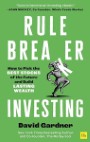
David Gardner, author of Rule Breaker Investing, is a well-known figure in the American investment world. He is famous for his investment website and company, Motley Fool(Fool.com), which he founded with his brother and is highly regarded among retail investors, making it a virtually universally recognized investment media outlet in the US. I have introduced it multiple times in my book, website, and blog. It’s well-suited for beginners, known for its conversational, easy-to-read, and concise style; I personally highly recommend it to all US stock investors.
Investment Company
Foul.com, the investment website and company founded by the author, has over 400 employees. The website boasts rich content, with dedicated teams covering various industries and listed companies, and is frequently cited by numerous financial media outlets. Unless it’s a tiny market capitalization or a truly overlooked mini-listed company, there are articles discussing it, and the readability is quite high.
As for the investment company, it has consistently been ranked as one of the best companies to work for by Glassdoor, a platform that specifically rates employees.
Other Works by the Author
The author has actually published quite a few books, most of which emphasize the title “Rule Breaker,” and many are available for free download online. I’ve personally read almost all of them. This article introduces his latest book. In fact, his writing style, central ideas, and even content are largely similar. Those interested can even search for his books, investment videos, and podcasts on the investment website fool.com; the style is quite similar.
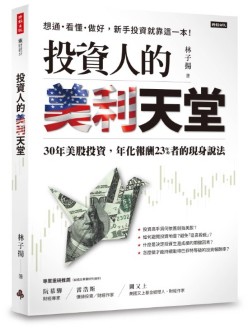
Chinese Book Title
My Opinion on the Book Title
First, I don’t agree with the title, “Rule Breaker Investing,” for the translated Traditional Chinese version, as it has little relevance to the original title or content. However, this is a long-standing tactic used by the Taiwanese publishing industry to attract readers; titles like 10-baggers or 5-baggers might not interest Taiwanese readers.
Breaking the Mold is the Author’s Focus
I want to emphasize that while this book does use 100-baggers stocks as examples and is indeed related to them, it’s not the focus. The focus of the author’s series of works is “Rule Breaker.” The key point is “Rule Breaker,” which should be translated into Chinese as “Breaking the Framework.”
Main Theme of this Book
Breaking the old rules
Breaking the old rules helps you find the real winners, identify disruptive companies, enter the market, and hold for long haul.
Author’s Insights
Why do many investors who diligently read classic investment books and study the methods of famous investment masters ultimately fail to achieve good investment performance? The author believes that classic investment books and the investment methods of investment masters can unknowingly trap most people in their thought frameworks.
Note: Charlie Munger also has similar (but not the same) view.
Investors without this understanding will not have great investment performance.
Reasons to Recommend This Book
The author’s writing style is very accessible, suitable for almost all investors—whether they are investment novices, have some experience, or are very experienced, they can all benefit from his book; however, I personally prefer that his book is more suitable for beginners. It’s a great boon for those who avoid investment lessons, dislike investment theories, don’t want headaches from reading, or feel sleepy while reading—because it’s easy to read and requires almost no learning curve.
The author of this book, David Gardner, mentions that his annualized investment return over the past twenty years is 21%! This is a very difficult achievement, an extremely challenging figure, while the S&P 500 index only achieved 9% during the same period.
Personally, I never believe that books written by famous figures, with high readership, excellent podcasts, engaging interviews, high academic qualifications, high social status, or great fame can significantly help investors—these are completely irrelevant to investing; because fame or performance and actual results are two entirely different things.
There’s a world of difference—what attracts me first must demonstrate results that I admire, and then everything else is considered. I believe his figure because I’ve been a long-time follower of his work and a reader of his website for over 15 years.
Two main themes of this book:
Six habits investors should cultivate
- Don’t rush to take profits
- Add to your position, don’t average down
- Hold for at least three years
- Find companies that benefit everyone; these are the companies that have the potential to become 100-baggers
- Never invest more than 5% of your portfolio
- Achieving a 60% success rate is enough
Six characteristics of 100-baggers
- Leaders and pioneers
- Long-term competitive advantage
- A stellar history of stock price appreciation
- Excellent management team and shareholders
- Ability to attract consumers
- Highly traded companies
Related articles
- “Investing for growth“
- ““One Up on Wall Street”, Peter Lynch’s great book for investing newbie“
- “Zero to One“
- “Why I prefer growth stocks instead of value stocks?”
- “Growth vs. Value Investing, Buffett’s view“
- “Tax, inflation and rate are the top three serious killers to investors“
- “Why growth stocks plunge, part two“
- “Why growth stocks plunge, part one“
- “How does Nike make money? The role model of growth stocks in non-tech industry“
- “Discover the possibility of super growth stocks in the civilian production industry“
- “Bet on dominant player, don’t predict“
Disclaimer
- The content of this site is the author’s personal opinions and is for reference only. I am not responsible for the correctness, opinions, and immediacy of the content and information of the article. Readers must make their own judgments.
- I shall not be liable for any damages or other legal liabilities for the direct or indirect losses caused by the readers’ direct or indirect reliance on and reference to the information on this site, or all the responsibilities arising therefrom, as a result of any investment behavior.