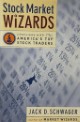
About the Author
Who is Jack Schwager?
Jack Schwager, the author of Stock Market Wizards, is a professional investor and author of several well-known and critically acclaimed investment books.
Highly Recommend His Market Wizards Series
Jack Schwager is best known for his Market Wizards series, which features interviews with dozens of top traders worldwide over forty years. These interviews are considered invaluable classics in the investment world.
The Market Wizards series is characterized by its use of firsthand accounts from investors with exceptionally high returns to share their investment strategies, principles, and advice. It is highly readable and informative, and even Warren Buffett highly recommends it.
Market Wizards Series
Jack Schwager Jack Schwager’s “Market Wizards” book series includes:
- Market Wizards
- The New Market Wizards
- Stock Market Wizards: The topic of this article
- Hedge Fund Market Wizards
- The Little Book of Market Wizards
I regularly read the Market Wizards series
I have personally read every book he has published, especially his Market Wizards series, which I still reread periodically. I learn from the insights shared by these highly successful investors, drawing lessons from their experiences and constantly reminding myself of them.
What makes this book special
Different investment styles can succeed
Stock Market Wizards doesn’t teach you secret techniques for trading stocks. Its main purpose is to prove to investors that, with strong risk control, self-awareness, and self-discipline, any investment style can be successful. In other words, “The road to success is not static.”
Follow-up Visits Years Later
This book focuses specifically on top stock traders in the United States, including interview transcripts of more than ten interviewees who explain their methods for stock market success. Notably, after the initial detailed interviews, the author deliberately revisits each interviewee years later to track whether their investment methods have changed, whether their investment performance has been affected, and to hear the interviewees’ own explanations of their changes over the years.
Book Contents
More Than a Dozen Famous Investors
This book interviews more than ten famous investors with diverse styles and outstanding investment results. Investors can read this book at their own discretion; regardless of your type of investor, you will definitely gain considerable insights. This post only mentions one, Dana Galante, particularly noteworthy interviewee for reference.
The performance of most interviewees is unbelievable
To reiterate, the investment performance of many of the interviewees in this book is unbelievable. For example, Alphonse Buddy Fletcher Jr.
Alphonse Buddy Fletcher Jr.’s flagship fund, the Fletcher Fund, established in September 1995, achieved an average annual compound return of 47%. Such a level of return is admirable in itself, but the real key point is that behind this performance, there were only four losing months throughout the entire period, and the worst loss was only -1.5%.
Fletcher’s trading performance before founding the fund was even more astonishing. Fletcher’s company was founded in 1991, and for the next four years, he primarily traded through a proprietary trading account. This trading account had a significantly higher credit expansion rate than later funds, resulting in an average annual compound return of 380% during this period. These early years’ performance figures came from a proprietary trading account and were therefore not published or reported, but all data was audited by certified public accountants.
Dana Galante
Going Against the Current is Difficult
Imagine two swimmers, a mile apart, swimming towards each other’s starting point in a very strong current. The swimmer swimming downstream wins the race. Is his swimming skill better? Obviously, this is a meaningless question. Even an Olympic swimmer might lose to a beginner due to the strong current.
Now, imagine two fund managers: one who only buys stocks and achieves an average annual return of 25% over a certain period, and the other who only shorts stocks and achieves an average annual return of 10% during the same period. Which manager has better trading skills? This is also obviously a meaningless question. The answer depends on the market’s direction and strength at the time, that is, the market trend. If the stock market rises by an average of 30% annually during this period, the manager who generates a 25% annual return is clearly worse than blindly shooting darts; the other manager, in a very unfavorable environment, generates a double-digit return.
Galante’s investment performance is remarkable
From 1994 to 1999, Dana Galante achieved an annualized return of 15%. This level of performance may not seem impressive at first glance, but Galante was a pure short seller, making this achievement extremely difficult.
To reiterate: Garland is a pure short seller! And the US stock market experienced a super bull market from 1994 to 1999, the period before the dot-com bubble.
Garland’s screener for shorting targets
Although Garland is a pure short seller, her ideas still offer insights for investors who simply want to go long. Garland’s method is very helpful for investors in selecting stocks to avoid or sell. The factors Garland values include:
- An unusually high price-to-earnings ratio
- Catalysts leading to short-term price weakness
- A pause or reversal in the upward trend
All three conditions must be met. Investors should regularly review their portfolio holdings, and any stock that meets these three conditions should be considered for sale. This practice can help investors reduce portfolio risk.
Warning Signs from Stocks Worth Shorting
In addition, Garland also mentions some warning signs, reminding her to pay attention to certain stocks worth shorting. In fact, these conditions can also serve as reference factors for investors when selling their holdings. These warning signs included:
- High accounts receivable
- Change of accountant
- Frequent changes in CFO
- Management blaming short sellers for stock price declines
- Changing the company’s core business to pursue trends
Dana Garland’s Post-Trade Development
Throughout her career, Garland had consistently fought against long-term upward trends; only in recent years had the market’s direction finally aligned with her trades, so her outstanding performance in a bear market is hardly surprising. Since the first month of the stock market downturn (April 2000), the funds managed by Garland have grown by a total of 119% in the past two and a half years.
Relative articles
- “The Little Book That Still Beats the Market”
- “The Art of Speculation”
- “Jesse Livermore’s Methods Of Trading In Stocks”
- “Stock Market Wizards“
- ““A Random Walk Down Wall Street” is a must-read for US stock investors“
- “How to Invest”
- “Best Loser Wins”
- “Charles Ellis and his “Winning the Loser’s Game”“
- “Great primer books for Investing in the stock market“
- ““One Up on Wall Street”, Peter Lynch’s great book for investing newbie“
- ““Benjamin Graham on Value Investing”, Graham’s bio book“
- “Great primer books for Investing in the stock market“
Disclaimer
- The content of this site is the author’s personal opinions and is for reference only. I am not responsible for the correctness, opinions, and immediacy of the content and information of the article. Readers must make their own judgments.
- I shall not be liable for any damages or other legal liabilities for the direct or indirect losses caused by the readers’ direct or indirect reliance on and reference to the information on this site, or all the responsibilities arising therefrom, as a result of any investment behavior.