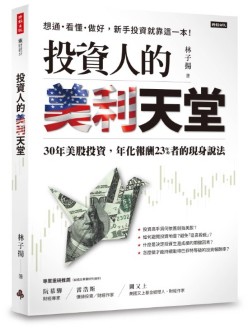
Author
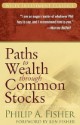
The author of this book is Philip Fisher, the author of Paths to Wealth Through Common Stocks, the same author of Common Stocks and Uncommon Profits.
Profound influence to Warren Buffett
At Berkshire Hathaway’s shareholder meeting, Buffett strongly recommended Philip Fisher’s Common Stocks and Uncommon Profits and Paths to Wealth Through Common Stocks to investors.
Buffett once stated that his investment approach was “85% derived from Benjamin Graham and 15% from Philip Fisher.”
Benjamin Graham’s two most famous books are The Intelligent Investor and Security Analysis.
Reasons to Recommend Paths to Wealth Through Common Stocks
This book was written approximately 60-70 years ago. Many investors or readers unfamiliar with it might immediately think it’s too old, outdated, and unsuitable; therefore, most wouldn’t even bother to flip through it. However, I must say that if you share this view, you should reconsider.
Firstly, Common Stocks and Uncommon Profits, The Intelligent Investor, and Security Analysis were all written around the same time as Paths to Wealth Through Common Stocks, yet these three books are among the most influential classics in the world of stock investing. Whether a book is good or a classic has nothing to do with its publication date.
Secondly, I read this book when I was younger, and I must frankly admit that I didn’t have a strong impression of it at the time. I didn’t personally grasp the depth of the book’s content or the topics the author discussed; in fact, I found it rather dry and tedious. However, after rereading it this time, my opinion has completely changed. I’ve realized that this book is indeed unsuitable for novice investors, impatient readers, those looking for long-term investing opportunities, or those willing to dedicate time to stock research. If you consider yourself to belong to these groups, then this book is definitely not for you—because you are not the author’s target audience.
Book Content Highlights
The author dedicates about half of the book, in the first chapter, to discussing in-depth financial topics such as markets, economics, investment, and currency. This part will likely seem tedious, dry, and too distant to most readers. I personally think most people probably won’t even finish the first chapter before giving up on the book.
Many readers of Common Stocks and Uncommon Profits likely echoed the author’s repeated emphasis that simply reading company financial statements is insufficient. He strongly advocated for investors to employ the “scuttlebutt” method—inquiring with suppliers, customers, peers, and competitors to cross-reference feedback and verify a company’s true competitiveness and growth potential. After reading Common Stocks and Uncommon Profits, most investors would be eager to delve into the author’s scuttlebutt method. In Paths to Wealth Through Common Stocks, the author provides numerous examples demonstrating how the scuttlebutt method can be practically applied to researching corporate competitiveness.
Following this, the author dedicates a chapter to meticulously describing what he considers the essential qualities of a good investment advisor. Note that Philip Fisher himself is a stock investment advisor—a highly self-disciplined one. I believe his key points are very valuable, especially for investors desperately seeking excellent stock investment advisors. They should carefully read the checklist the author provides.
Finally, Philip Fisher conducts an analysis of major industries in 1960, including his three most favored growth sectors: chemicals, electronics, and pharmaceuticals. This analysis, though 60 years old, doesn’t feel out of place; many of his industry views, filtering criteria, and forecasts remain relevant today.
Closing words
Philip Fisher was a very practical and consistent individual. He advocated long-term investing, concentrated investing, and betting on companies in industries he had a deep understanding of. Paths to Wealth Through Common Stocks fully demonstrates that he truly embodied these principles.
Related articles
- “Philip Fisher’s book – Paths to Wealth Through Common Stocks”
- “Buffett archive, meetings, and quotes“
- “Stock Investing Books recommended by Andy Lin“
- “Buffett and Munger Unscripted – Selected transcript from Berkshire Hathaway shareholder meeting Q&A “
- “Of Permanent Value”
- “Warren Buffett Speaks”
- “Buffettology”
- “Primer’s book to know Buffett-“Warren Buffett: Investor and Entrepreneur”“
- “Buffett’s most important original book “Tap Dancing to Work”“
- ““Benjamin Graham on Value Investing”, Graham’s bio book“
- “The Chronicle of Buffett Partners “Warren Buffett’s Ground Rules“
- “The Wisdom of Charlie Munger-Key points from Munger Wesco’s 24 years of shareholder meetings“
- “The Charlie Munger Way-Key points from Munger Daily Journal’s 10 years of shareholder meetings“
- “Munger’s most important work “Poor Charlie’s Almanack”“
- ““Damn Right”, Charlie Munger’s biography book“
- “The commonalities of Buffett portfolio – cheap, fixed income, repurchase“
- “Possibility of long-term holdings, Deep dive on Buffett’s case“
- “How Buffett Structures His Long-Term Investment Portfolio“
- “Why Buffett deserves further study?“
- “What helps Buffett to get his investment idea?“
- “Buffett’s 2025 Berkshire Shareholder Letter“
- “Buffett’s 2024 Annual Shareholder Letter“
- “Buffett’s 2023 Annual Shareholder Letter“
- “2024 Berkshire shareholders meeting transcript and video“
- “2023 Berkshire shareholders meeting transcript and video“
- “Buffett’s first TV interview“
- “Full transcript of Buffett’s interview with CNBC’s Squawk Box“
- “Charlie Munger, a great investor worth remembering“
- “Charlie Munger speaks at 2023 Daily Journal Shareholders Meeting“
Disclaimer
- The content of this site is the author’s personal opinions and is for reference only. I am not responsible for the correctness, opinions, and immediacy of the content and information of the article. Readers must make their own judgments.
- I shall not be liable for any damages or other legal liabilities for the direct or indirect losses caused by the readers’ direct or indirect reliance on and reference to the information on this site, or all the responsibilities arising therefrom, as a result of any investment behavior.