Diversified conglomerate
American Express establishment
In 1850, American Express (ticker: AXP) was formed as a joint stock company by the merger of Butterfield, Wasson & Co., a cash transport company owned by Henry Wells, William G. Fargo and John Butterfield. Note that the first two founders were also the founders of Wells Fargo (US stock code: WFC)!
Delivery Business
When American Express was founded, its main business was freight courier. It was a freight forwarding company, which is why the word “Express” was in the company name.
In the winter of 1917, the United States suffered a severe coal shortage, and in December President Wilson requisitioned the railroads to transport federal troops, their supplies and coal. All contracts between express companies and railroads were canceled, and the government merged all existing express companies into one company to meet the needs of the country. This move ended American Express’s express business, and a new company was formed in July 1918 to take over the centralized equipment and property of all existing express companies, with the largest share (40%) coming from American Express.
New Business and Transformation
During the 2008 financial crisis, American Express transformed into a bank holding company.
Spinoffs and divestiture
Spin-off of Credit Card Data Business
First Data (ticker:FDC) was formed in 1969. In 1976, First Data became the first company to process credit cards issued by Visa and MasterCard banks.
In 1980, American Express Information Services (ISC) acquired 80% of First Data. The remaining 20% was purchased in 5% increments each year until June 1983.
In April 1992, American Express spun off First Data in its initial public offering.
Fiserv (ticker: FI) acquired First Data in July 2019.
Spin-off of investment banking business
In June 1994, American Express spun off its remaining investment banking and institutional businesses into Lehman Brothers (ticker: LEH), ending its foray into brokerage business.
In mid-2008, affected by the chain reaction of the subprime mortgage storm, it suffered a major blow in terms of finance and suffered losses. On September 15, 2008, after the US Treasury, Bank of America and Barclays Bank of the United Kingdom successively abandoned acquisition negotiations, Lehman Brothers announced that it had filed for bankruptcy protection. Lehman Brothers’ bankruptcy is considered a sign that the 2007-2008 global financial crisis was out of control.
Spin-off of financial advisory department
On September 30, 2005, American Express completed the corporate spin-off of its American Express financial advisory department Ameriprise Financial. The main business of MTBC Financial is to provide financial planning products and services, including wealth management, asset management, insurance, annuities and estate planning. As of April 2022, more than 80% of the company’s revenue comes from wealth management.
Selling tax and business services
In August 2005, H&R Block (ticker: HRB) acquired American Express’s tax and business services division (TBS) and merged it with RSM McGladrey.
Selling banking business
In March 2008, Standard Chartered Bank acquired American Express’s international banking subsidiary American Express Bank Inc. for US$823 million.
Spin-off business travel business
In March 2014, American Express announced the spin-off of its business travel business into American Express Global Business Travel and sold 50% of the business to an investment group led by Certares LP for US$900 million.
Diversified and huge business
Current business
Credit cards, debit cards, traveler’s checks, and corporate banking are the company’s four main businesses. But it must be emphasized here that American Express is not just a credit card company, it is an extremely large diversified group.
Credit card business
Inspired by the success of Diners Club, American Express entered the credit card market at the end of 1957 and officially launched the debit card (travel credit card) in 1958.
The fourth largest credit card company in the world
American Express is a bank holding company and multinational financial services company specializing in payment card business. It is the fourth largest credit card network in the world, second only to China UnionPay, Visa and MasterCard.
Key operating figures
As of December 31, 2023, there are 141.2 million valid American Express cards worldwide, with an average annual spending of US$24,059 per cardholder. More than US$1.7 trillion in purchase volume (TPV) is processed each year.
Customized cards
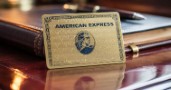
American Express offers various types of cards, including travel and dining cards, daily consumption points cards and cash back cards. Each category has several card options with different benefits and reward structures. Premium cards such as the Green, Gold, and Platinum cards cater to customers who travel and dine frequently, with offers tailored to those activities.
Upgraded Credit Cards
In 1984, American Express introduced the Platinum Card, described as a “super exclusive” credit card with an annual fee of $250. This offer was invitation-only to American Express customers who had at least two years of membership, large purchases, and a good payment history. In 1987, American Express introduced the Optima Card, the first credit card product that did not require full payment at the end of the month. In 1999, American Express introduced the high-fee Centurion Card (often referred to as the “Black Card”) to cater to a more affluent customer base. It claims to have launched a super exclusive Black Card for elite users who can use it to buy anything.
Low Acceptance Outside the U.S.
Amex credit cards are accepted by 99% of U.S. credit card merchants, but acceptance of American Express credit cards is much lower in Europe and Asia.
Boston Fee Party Incident
American Express charges about 4% per transaction, while Visa and MasterCard charge about 1.2%. In 1991, some restaurants in Boston (later known as the “Boston Fee Party”), including some that only accepted American Express, complained that American Express charged too high a commission and stopped accepting American Express, but accepted and encouraged the use of Visa and MasterCard. The reason was that its fees were much lower than those of American Express at the time.
This incident spread across the United States and dealt a big blow to American Express. American Express fought back by reducing the interchange fees of merchants and restaurants that only accepted American Express and not other credit or debit cards. Subsequently, American Express stopped reducing the interchange fees of merchants that exclusively accepted it and expanded its market share through targeted marketing campaigns. This triggered complaints from competitors such as Visa and MasterCard.
Costco, the largest customer, switches to Visa cards
Costco, which has offered Costco co-branded membership cards since 2004, ended its partnership with American Express in the United States in 2016 and in Canada in 2015 and switched to Visa cards. The partnership with Costco accounted for 8% of American Express’s bill business, or $80 billion, and 20% of its interest-bearing credit business, about $14 billion. The impact of losing Costco card accounts is huge; in the first quarter without Costco cards, the company’s profits fell 10% year-on-year and revenue fell 5% year-on-year.
Travelers’ checks
Predecessors
In 1857, American Express began to expand its financial services field and launched a money order business to compete with the U.S. Postal Service’s money order business.
How did the idea come about?
Between 1888 and 1890, J.C. Fargo, the president of American Express, went to Europe and returned frustrated and angry. Although he was the president of American Express and carried traditional letters of credit, he found it difficult to get cash anywhere except in large cities. Fargo approached Marcellus Berry and asked him to come up with a better solution than letters of credit. Berry introduced American Express Traveler’s Checks, which were issued in 1891 in denominations of $10, $20, $50, and $100.
Internationalizing American Express
The invention of traveler’s checks by American Express made American Express a truly international company. During World War I, American Express in Europe was one of the few companies to recognize letters of credit (issued by various banks) held by Americans in Europe when other financial institutions refused to provide assistance to these stranded travelers. The British government even designated American Express as its official agent.
Investment Banking Business
First Entering the Securities Brokerage Market
In mid-1981, American Express acquired Shearson Loeb Rhoades of Sanford I. Weill, the second largest securities firm in the United States, to create American Express’s investment banking division. At the time of the acquisition, Shearson Loeb Rhoades was the second largest securities firm after Merrill Lynch.
Acquisition of Lehman Brothers
In 1984, American Express acquired Lehman Brothers and merged it into the Shearson family to form Shearson Lehman/American Express.
In 1984, Shearson/American Express acquired Investor Diversified Services (IDS), bringing with it a group of financial advisors and investment products. In 1988, Shearson Lehman acquired brokerage firm EF Hutton & Co. and merged its investment banking business. The investment banking division was renamed Shearson Lehman Hutton.
Banking Business
American Express is the 16th largest bank in the United States, with total assets of $270 billion, accounting for 1.1% of all assets insured by the Federal Deposit Insurance Corporation (FDIC).
Travel Agency Business
In 1915, American Express established a travel division and soon established its first travel agency.
Airport lounges
American Express began operating airport lounges in 2013, providing access to certain cardholders. In March 2019, American Express acquired LoungeBuddy, a provider of paid services for designated airport lounges around the world.
Competitors
Credit card competitors
Including Visa, MasterCard, and Citi’s Diners Club, all of which are competitors of American Express.
Once again, American Express is not just a credit card, it is very different from Visa or MasterCard; see my previous post for details: “What’s the credit card difference among American Express, Visa and MasterCard ? at least 8 differences“
Related articles
- “Morgan Stanley, the king of investment banks“
- “American Express, one of the best investments of Buffett’s career“
- “What’s the credit card difference among American Express, Visa and MasterCard ? at least 8 differences“
- “Wells Fargo, a major holding once praised by Buffett and Munger“
- “Several possible threats to the Visa and Mastercard credit card networks“
- “The differences between Visa and Mastercard?“
- “Has the moat of ubiquitous credit card networks loosened?“
- “Amazon’s dominance from stock price trends of PayPal, Affirm, Fair Isaac, Visa, and Mastercard“
- “The commonalities of Buffett portfolio – cheap, fixed income, repurchase“
- “Possibility of long-term holdings, Deep dive on Buffett’s case“
- “The companies Buffett owns more than 20%“
Disclaimer
- The content of this site is the author’s personal opinions and is for reference only. I am not responsible for the correctness, opinions, and immediacy of the content and information of the article. Readers must make their own judgments.
- I shall not be liable for any damages or other legal liabilities for the direct or indirect losses caused by the readers’ direct or indirect reliance on and reference to the information on this site, or all the responsibilities arising therefrom, as a result of any investment behavior.