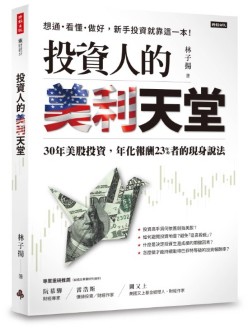
In my book, “The Rules of Super Growth Stocks Investing” I shared several inspiring stories of long term retail investors, and these stories resonated deeply with readers. This article will introduce readers to more of the world’s most renowned individual investors who built wealth through long-term investing, with the goal of helping everyone understand:
- “Why long-term investment is better?“
- “Stocks are the best bet for long-term investors“
- “The Compound Effect“
- “The power of compound interest“
- “Great companies are rare, two or three will make you very rich“
- “Do it right a few times in your lifetime is enough“
- “Two or three stocks in your life can make you very rich“
American Retail Investors
Abbott’s Secretary
Grace Groner passed away on January 19, 2010, at the age of 100. Before she breathed her last, Grace did something that would later become a stock ownership story that astounded Wall Street. She worked as a secretary for 43 years, buying only “one stock” and holding onto it for 75 years, growing her company’s stock from $180 to $7.2 million.
Grace was born in 1901. With financial support from her adoptive father, she graduated from Lake Forest College in 1931 and subsequently worked at Abbott Laboratories. In 1935, she spent $180 to buy three shares of Abbott stock at $60 each. The stock split several times, and she reinvested the dividends. She lived a simple life in a small cabin, but generously donated money anonymously to those in need. Despite her modest lifestyle, she also traveled extensively.
In 2008, she established a foundation, which is estimated to generate approximately $300,000 in annual interest. Upon her death, she bequeathed the foundation to her alma mater, Lake Forest College. Upon receiving the donation of over $7 million, the president’s lips trembled as he uttered, “Oh, My God!!!!!” (Seven exclamation points) If she hadn’t invested any additional capital beyond the $180, this investment would have multiplied 38,889 times in 75 years, a compound annual return of 15.13%. You read that correctly, not a percentage, but a multiple! While this annualized return is lower than Buffett’s 50-year 21.6%, it still eclipses the 50-year 9.9% return of the market, which is considered unbeatable.
A Lifelong Worker
Ronald Read passed away on June 2, 2014, at the age of 92. He lived in a small town in Maine and worked as a laborer throughout his life, eventually becoming a cleaner in his later years. Born in 1921 to a modest family, Read first worked at a gas station for 25 years before retiring. However, finding retirement unsatisfying, he returned to work as a cleaner at J.C. Penny department store, finally retiring in 1997 at the age of 76. His wife passed away 40 years ago, and Read has lived alone ever since. He has a stepson who lives in another state and visits him every few months.
Ronald Read had only two hobbies in his life: reading the Wall Street Journal and chopping wood. His garage was stockpiled with logs for the winter stove, but his stepson was unaware of his stock market investments. After his death, his executor opened the bank safe and discovered a three-inch-thick stack of 328 stock certificates representing shares in over 90 companies. After sorting through the documents, 76 stocks remained, due to mergers and other factors. The purchases spanned decades, with some purchases dating back to 1959. Most were blue-chip stocks that paid dividends.
Ronald Read lived a frugal life, living a simple life. Lawyer said that when he visited her law firm, he would park far away to save on parking fees. He also tried to minimize transaction and management fees by keeping his stocks himself or by having them managed free of charge by an agency designated by the issuing company. Neither his friends, neighbors, nor even his stepson were aware of his vast holdings.
Attorney Rowell and executor Claire Johns, who announced the will, said: “Reed was an ordinary blue-collar worker. His biggest expense was a long-term subscription to the Wall Street Journal and Barron’s. He read financial books and newspapers and was a frequent visitor to the public library. In his will, he donated most of his $8 million in lifetime investments to charitable causes. The largest donation was $4.8 million to the local hospital, a significant gift to the small, nonprofit hospital. The hospital has only 61 beds, serving over 50,000 people, and the donation will be used to expand and purchase additional equipment.”
Librarian
A librarian named Robert Morin, who never even had a so-called fancy lunch, donated his life savings to his alma mater. After graduating from the University of New Hampshire in 1963, Robert earned a master’s degree in library science from Simmons College. Upon graduation, he returned to his alma mater, the University of New Hampshire, to become a librarian.
Thus, Robert spent his entire life working in libraries, and in 2014, with much reluctance, he retired! After retirement, he maintained close contact with his colleagues at the library. Childless, he was always eager to help when he fell ill and needed care, and the staff stepped up one by one. Despite his colleagues’ meticulous care, Robert passed away a year after his retirement at the age of 77.
Shortly after his death, his astonishing will was discovered. He left all his money to the University of New Hampshire, where he had worked his entire life. Even more astonishing was the sum: nearly $4 million! A librarian who had never even enjoyed a so-called luxurious lunch before his death, yet he dedicated his life savings to his alma mater.
A Stock That Returned 20,000 Times
Back in the 1940s, Russ Gremel thought investing in the Walgreens pharmacy chain would be a good idea. People always needed medications, and women always bought cosmetics. So, he invested $1,000 in the Chicago-based pharmacy chain.
Gramer never sold a single share of stock, and as Walgreens’ stock price continued to rise, he eventually amassed a fortune of $2 million. Did he buy a mansion? A luxury car? Or at least a flat-screen TV? No. Gramer donated all his money to the nonprofit Illinois Audubon Society for environmental purposes. “Everyone should do something for the world,” Gramer said. “That’s what money is for.”
Over the weekend, the Illinois Audubon Society used the donation to establish a nearly 400-acre wildlife sanctuary in Gramer’s name. Gramer, a humble and unpretentious man who has lived in the brick bungalow for nearly 95 years, told the Tribune that he didn’t need the money. “I’m a very simple man,” explained the World War II veteran, who preferred oatmeal to a feast. “I never let anyone know I had any money.”
This was clearly a lesson he learned firsthand from watching his family struggle to survive during the Great Crash of 1929. “In 24 hours, we went from prosperity to poverty,” Gramer said. “We had no money. No food stamps. We had nothing except our friends and neighbors.”
A Legal Secretary from Wall Street
A legal secretary named Sylvia Bloom began her career at a New York City law firm in the financial world in 1947 and remained there until 2014, a staggering 67 years. She died a few years later at the age of nearly 99.
Sylvia Bloom’s niece, Jane Lockshin, was the executor of her estate. When she saw the size of her estate, she couldn’t believe her eyes: it was worth over $9 million, primarily in common stock. Blum left two-thirds of her estate to the historic Henry Street Settlement, the largest donation ever to the prestigious Lower East Side social service charity. Blum’s staggering wealth was unknown to everyone, including her late husband, a retired firefighter.
She worked at the same law firm for 67 years, retiring at age 96. She earned over $9 million by imitating her lawyer boss’s investments. Family members recalled, “As a secretary, Bloom had to take care of every aspect of her boss’s life, including his personal investments. So when he wanted to buy a stock, she would do it for him, and then she would follow suit, albeit in smaller quantities because she was paid a secretary’s salary.”
However, she kept a low profile during her lifetime, and no one knew she was wealthy until she passed away in 2016, shortly after retiring. In her will, she donated the majority of her estate to scholarships, revealing her wealth. Even more generously, Bloom left some of her money to family and friends, and asked Locksing to donate the rest to students in need. She also donated $6.24 million of the money to the 125-year-old New York nonprofit Henry Street Settlement.
How did a secretary achieve such remarkable success in a field where so many of the biggest names in finance have failed? There are three reasons for Bloom’s success: First, she didn’t invest with borrowed money. Second, she had time on her side—she had decades of experience to build her fortune. Bloom never dreamed of getting rich quick, but rather built her wealth slowly, step by step. Bloom was able to transform her relatively meager savings as a secretary into millions of dollars because her strategy allowed compound interest to work its magic for sixty-seven years.
Foolish behavior in finance includes using leverage, blindly chasing after star fund managers, overestimating one’s risk tolerance, and watching cable TV financial shows.
Retail Investors in Asia
Taiwanese Grandma
Grandma wasn’t very literate, but she would meticulously write down the rise and fall of every stock on TV in her notebook, then ask Grandpa to buy and sell. Grandma, now in her 90s, started investing in stocks in her 50s. Back then, stocks started at around 5 or 10 dollars, which was incredibly cheap compared to today. She bought Uni-President, Jiu Yuan, and the others and held onto them, regardless of price fluctuations. Their prices have increased by 619%, 495%, and 444%, respectively. Furthermore, these three stocks have consistently yielded annual dividends exceeding 4%, meaning she not only profited from the price difference but also received a good dividend.
Hong Kong’s Stock Grandma
This Hong Kong stock grandma shares many of Buffett’s ideas, especially with her education, which is barely above elementary school level! Grandma draws on her experience observing people in the market to identify the right time to buy and sell stocks. She felt that the group of housewives who usually surrounded the stock price machine with her at the bank were too excited, even to the point of being irrational. Based on her past experience, she knew that in such situations, it was best to leave first. Although she could barely read, she was able to grasp people’s minds and observe details, which helped her avoid the impact of the financial tsunami that year.
Grandma’s stock investment method rarely looked at numbers, focusing only on the stock price, the number of shares, and the dividend yield. She mentioned the dividend yield most often. Whenever she bought a stock, she would calculate how much it would increase her annual income. As for other factors, she really didn’t look at them.
During the financial tsunami, HSBC fell to the 30s. Her reasoning behind buying HSBC was simple: a golden Chinese business saying: “When others abandon, I take.” Before the tsunami, HSBC was 150 yuan a share, and everyone rushed to buy it. During the tsunami, HSBC was 40 yuan a share, and no one dared to buy it.
The stock market god’s investment strategy consisted of two parts: short-term speculation and long-term holding for dividends. Why didn’t she sell all her stocks when the market was overheated? Selling all her stocks would certainly have yielded a significant amount of cash, but that money wouldn’t earn interest if kept in the bank. Without the income from stocks, what would Grandma have lived on? Companies like CLP and HK Electric were always profitable and never ran out of money to pay dividends. Even when their stock prices fell, they could buy more, increasing their dividends. At the time, these companies were still paying dividends, so there was no need to sell them.
Japanese Female Employee
She worked at Itochu Corporation, a major Japanese conglomerate, for 40 years, regularly purchasing its own stock. By the time she retired, her stock holdings were worth 800 million yen, and she received an annual dividend of 20 million yen. Even Itochu President Masahiro Okafuji was shocked when he learned of this.
According to Japanese media outlet Financial Field, Masahiro Okafuji noted in Itochu Corporation’s September 2025 comprehensive report that a female employee bid him farewell upon retirement. She recounted how, after graduating from university, she joined an Itochu textile company in the mid-1970s and worked in the executive branch for 40 years, steadily purchasing company stock over those years. Okafuji stated, “What surprised me most after hearing her story was the size of her holdings at the time of her retirement.”
The report indicated that the female employee held a significant amount of Itochu stock at the time of her retirement, with a market value of 800 million yen and annual dividends totaling 20 million yen. The article also revealed that in Japan, those with net financial assets exceeding 500 million yen (approximately NT$100 million) are considered “super-rich.” The female employee became wealthy thanks to her own stock holdings. According to a Nomura Research Institute survey, this figure is roughly equivalent to the top 0.2% of Japanese households by income.
An elderly man with a simple lifestyle
An 82-year-old man in a small town in New Hampshire, USA, passed away several months ago and left a legacy of $3.8 million (approximately NT$114 million) to the town to support public services such as education, culture, entertainment, and health. Because he lived in a mobile home in a park, his home was extremely simple, lacking even a television. Town residents had no idea he was a “hidden millionaire.” His sister explained that he had accumulated this wealth through his investment prowess and frugal lifestyle, and that his wish was to leave this great gift to his hometown.
According to foreign media reports, Geoffrey Holt was born in Hinsdale, a small town in New Hampshire with a population of only 4,200. He died in June of this year at the age of 82. Holt rarely left his town and lived in a mobile home in a park. His home was very simple, with few furniture, no television, and no computer. He did not drive a car and only used a single bicycle for transportation.
The townspeople usually only knew Holt, known for his shabby clothes, his penchant for reading the newspaper while reclining on a lawn mower, leisurely watching cars go by, or shopping at the convenience store. His life was remarkably simple. Upon his death, Holt’s will left his entire fortune to the town for development in public services such as education, culture, entertainment, and health. He left behind a staggering $3.8 million, leaving the town unaware of his hidden wealth.
Holt’s sister, Alison Holt, explained that their family, influenced by their father, lived frugally and treasured money. Holt had learning disabilities from a young age, but his intelligence thwarted his development. Holt’s friend, Ed Smith, reported that Holt, as a young product manager at a barn, earned millions of dollars through his investments. Furthermore, Holt was divorced in his youth and had no children with his wife. Later in life, he suffered a stroke that left him with limited mobility, so he hoped to leave his inheritance as a gift to his hometown.
European Retail Investors
Swedish Train Dispatcher
Lennart Israelsson, 99 years old in 2016, is a very successful Swedish individual investor. Remarkably, he was born into a poor farming family with many siblings, so he only received five or six years of education. He eventually found a stable job as a train dispatcher at a railway station, a position he held until his retirement in 1980. Swedish newspapers had long nicknamed him “Aktiestinsen.”
Despite his low education (only five or six years of civic education!), low salary, and minimal investment knowledge, he had built a stock portfolio worth $1 million by the time he retired. Ten years later, it grew to $15 million, and after another 17 years, it reached $138 million in October 2007. In March 2009, his portfolio plummeted to just $26 million. But he continued to invest during the crisis, buying good companies at low prices (he rarely sold!). So, by October 2009, his portfolio had quickly grown to $150 million. From $26 million to $150 million (approximately NT$500 million), this represented a 477% increase.
He began buying stocks in 1946, using most of his savings to buy five Sandvik shares at 600 kronor per share. 600 kronor was four months’ salary for him at the time! 5 times 600 equals 3,000 kronor. He was 30 years old that year.
The “Stock Operator” probably had a lot of free time at the train station, so he often read the newspaper. One day, he read a warning from a Gothenburg University economics professor: “Inflation will eat up your salary! It’s best to learn how to invest to combat inflation.” He then invested all his savings in stocks. He was interesting in that he rarely sold his stocks after buying them.
From the time he bought five Sandvik shares in 1946 until his retirement in 1980, his stock portfolio was worth exactly 1 million kronor (someone calculated that his entire career pre-tax income as a train station dispatcher was 825,000 kronor!). Ten years later, in 1990, his portfolio had grown to 15 million kronor. In early 1990, the stock market crashed, and his 15 million kronor portfolio was worth only 5 million due to the decline in stocks.
He kept a cool head and continued buying even during the market crash. So, in 2000, ten years later, his portfolio had grown to $56 million. Seven years later, in 2007, it reached $138 million! Besides the crash of the early 1990s, he experienced two other crashes. In October 2002, his portfolio plummeted from $56 million to $36 million. This time, it seemed less catastrophic, a drop of only 36%. But the Lehman Brothers financial meltdown on September 15, 2008, reduced his $138 million to just $26 million! $112 million wiped out!
He told the newspaper that a full 74% was lost. I calculated it, and it’s 81%! However, he continued to enter the market during crises and never sold at low prices. Therefore, after 2009, his holdings returned to their original $138 million and have continued to increase to the current $150 million.
His investment philosophy is simple: net asset value (NAV), or book value. He emphasizes that if you can buy at a discount to NAV—for example, if you can buy something worth $1 for just 50 cents—that’s a good deal, or what he calls “obtaining Substansrabatt.”
Closing words
I am a long-term US stock investor. I am well aware of human short-sightedness and the tendency of the media and celebrities to promote short-term swing trading and “card-based” trading, dismissing long-term investors as fools. Therefore, long-term investing is rarely accepted by the majority. However, this does not change the evidence presented by facts and statistics: stocks are only a good investment for the long term.
But don’t forget, this is also one of the fundamental reasons why most people don’t make money investing in stocks, or why it’s difficult for them to become wealthy or retire early. Because those who do make significant profits from stocks are mostly long-term investors. This article, featuring stories from some of the world’s most renowned individual investors who have achieved wealth through long-term investing, hopes to help readers understand that long-term investing is within reach for everyone. The key is your willingness to invest.

Relative articles
- “Almost no long-term Taiwan investors“
- “Public reaction on Almost no long-term Taiwan investors“
- “Andy Lin’s long-term investment experience sharing“
- “Why long-term investment is better?“
- “Stocks are the best bet for long-term investors“
- “How Buffett Structures His Long-Term Investment Portfolio“
- “Is Buffett no longer hold for long haul? TSMC, HP, and US Bancorp cases study“
- “Why are only US stocks the most valuable for long-term investment?“
- “Possibility of long-term holdings, Deep dive on Buffett’s case“
- “The Compound Effect“
- “The power of compound interest“
- “Great companies are rare, two or three will make you very rich“
- “Do it right a few times in your lifetime is enough“
- “Two or three stocks in your life can make you very rich“
- “Time, discipline and patience are the three elements of successful investment“
- “Patience, an indispensable element of investment success“
Disclaimer
- The content of this site is the author’s personal opinions and is for reference only. I am not responsible for the correctness, opinions, and immediacy of the content and information of the article. Readers must make their own judgments.
- I shall not be liable for any damages or other legal liabilities for the direct or indirect losses caused by the readers’ direct or indirect reliance on and reference to the information on this site, or all the responsibilities arising therefrom, as a result of any investment behavior.