Introducing Book Author
The Author profile
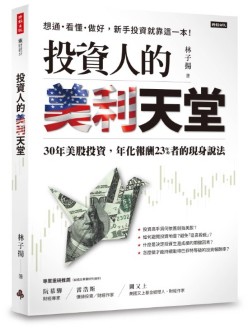
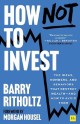
Barry Ritholtz, the author of book “How Not To Invest“, is the co-founder, chairman, and chief investment officer of Ritholtz Wealth Management LLC. He has over thirty years of experience in the financial industry.
His blog, The Big Picture, is one of the earliest financial blogs, with over 275 million visits. Ritholtz also founded and hosts Bloomberg Radio’s most popular podcast, Masters in Business.
Book Summary
The following is a brief summary of the book by the author, which I believe is very well written and has been quoted verbatim here:
This book draws upon a lifetime of learning and experience, refining various sources while retaining the essential elements. Among its most profound insights are:
Charley Ellis explains: The path to investment success is like playing tennis—fewer unforced errors lead to soaring performance.
Charlie Munger teaches us how to think about investing: Don’t try to be smarter than everyone else; just do fewer stupid things.
The author’s main points in the book
- Investing is an art: using imperfect information to make probabilistic assessments of an inherently unknowable future.
- Regarding advice: If I follow this advice, what are the risks? Is this advice specifically tailored to me (and my investment plan)? What are the costs of this advice—how much is the fee? How much tax will be levied? What opportunities will I miss as a result?
- Regarding the people giving the advice: What are they selling? What is their track record? What conflicts of interest do they have?
- The financial advisors who managed the Reimann family’s assets made a fortune, but caused the Reimann family to miss out on $13-17 billion in profits.
- Neuroscientist, author, and investor William Bernstein once said something very insightful: “The reason the word ‘guru’ is so popular in English is because the word ‘charlatan’ is too difficult to spell.”
- News is rarely new. News is a retrospective, telling you what has already happened. Investing deals with what will happen in the future. Recent events may interest you, but they have little to do with your investments. By the time the news breaks, the stock price has already reflected it.
- When you read, listen, or watch anything, you must analyze its completeness and accuracy. Every piece of information must be viewed based on its own veracity, and the credibility of the author/publisher must be considered. Investors cannot blindly accept or reject something simply because it appears in a magazine or on the internet. “Never assume the accuracy of a source without knowing its past track record.”
- In the world of investing, “Recognizing what you don’t know, and therefore not gambling on it, is extremely important.” This is a crucial quality that every investor should possess. Too many people assume they make decisions based on what they know, but usually, it’s just a misconception.
- Nobody knows nothing!
- Bertrand Russell said, “The problem with this world is that fools and fanatics are always convinced of their own worth, while the more sensible are often confused.”
- Howard Marks: “Being right may be a necessary condition for successful investing, but it’s not enough. You have to be right more than everyone else…and by that definition, you have to think differently.”
On Stock Valuation
- Valuation cycles are primarily driven by psychological factors; therefore, fair value is a point in a time series that is constantly changing. Cycles begin with investor indifference and end with investor over-excitement.
- A cheap stock may be bad. An expensive stock isn’t necessarily bad.
- Expensive stocks should lower your expectations of future returns, while cheap stocks should rise, but only after a long period of time, when mean reversion takes effect.
- Valuations can occasionally be extremely distorted (particularly cheap or very expensive), prompting you to adjust your stock exposure. I estimate these rare instances occur less than 2% of the time.
Earnings and Stock Price
There is actually very little correlation between earnings growth and stock price increases. In the 1950s, corporate earnings grew by less than 4% annually, yet it was still one of the best-performing decades for the stock market. Conversely, the 1970s, while experiencing the fastest earnings growth in the past 55 years, became one of the most disastrous decades for stock market investors.
Why are predictions useless?
All predictions are the same. The fundamental reason predictions are useless is that they assume the future will be similar to the past, ignoring how many unexpected and unforeseen events actually occurred, thus omitting them from the model. Our predictions are logical deductions beforehand, but the truth only becomes clear after actual experience (afterwards), leading us to believe we know more than we actually do.
Words of advice for bull market optimists:
- Every bull market is followed by a bear market.
- In a long-term bull market, a buy-and-hold strategy is simple, but in a long-term bear market, it becomes much more difficult.
- Returns are the result of risk: the higher the return you seek, the higher the risk you must be willing to accept.
- Value matters.
- “Risk” means that sometimes you will receive less reward than expected.
- Economic cycles exist, and recessions occur periodically.
- Extreme market volatility is inevitable. After all, the market is composed of a group of people; emotions sometimes override reason.
- Behavior is a crucial element of investment performance. If you act impulsively when stock prices inevitably fall, temporary drawdowns can become permanent losses.
- Extrapolating from current trends to the possibility of unlimited rises or falls is a reckless conclusion.
- Politics and investing are terrible partners. Extrapolating from current trends to the possibility of unlimited rises or falls is a reckless conclusion. Common Unforced Investment Mistakes
- Have a plan;
- Excessive fees;
- Be mindful of tax issues;
- Your behavior;
- Asset allocation;
- Passive vs. Active management;
- Blindly pursuing high yields;
- Understand cycles;
- Paying for services and then using them;
- Have a long-term mindset;
- Misunderstanding the nature of risk;
- Emotional decision-making and cognitive errors.
Ten Things to Do to Become a Better Investor
- Avoid making mistakes (fewer unforced errors, less foolishness).
- Recognize your strengths (and utilize them).
- Develop a financial plan (and stick to it). If you need help, remember to seek out people with a duty of loyalty.
- (Primarily) adopt index investing. Hold a broad range of low-cost stock indices to enjoy the best long-term results.
- Hold bonds to generate income and offset the volatility of stocks. The primary holdings are U.S. Treasury bonds, investment-grade corporate bonds, municipal bonds, and U.S. TIPs (Treasury Inflation-Proof Bonds).
- Be mindful of tax regulations. Consider direct index investing to reduce capital gains taxes and decrease concentrated positions.
- 6B. If a single position generates extraordinary returns, adopt a regret-minimizing strategy.
- Be skeptical of all alternative investments (including venture capital/private equity, obviously in equity/hedge funds/private credit) except for the best few.
- Spend money smartly: buy time, experience, and enjoyment.
- Fail better. Understand what you can control and what you cannot.
The Consequences of Chasing Celebrities
- Morningstar Report: Cathy Wood’s Ark Invest has lost nearly $14.3 billion over the past 10 years.
- Cathy Wood’s flagship fund has earned a staggering $310 million in commissions since its inception, while investors have lost $9.5 billion. Since its founding, ARKK investors’ dollar-weighted return has been approximately -27%.
- In March 2020, ARKK achieved a return of 359%, but its total performance return since its founding in 2014 was only 161%, compared to a 247% return for the S&P 500 during the same period.
Related articles
- “How Not To Invest”
- “Tools of Titans”
- “Same As Ever”
- “The Fog of War”
- “Die Kunst des klaren Denkens”
- “Jim Simons, the lord of quantitative investing“
- “Protect your reputation and love your job“
- “You can “Dream big and Win” also“
- “Richer, Wiser, Happier“
- “Secrets of the Millionaire Mind“
- “Rich dad, poor dad“
- “The Psychology of Money“
- “Unconventional “The Millionaire Fastlane”“
- “An excellent book for career and life- The Almanack of Naval Ravikant“
- “The main investment principles of successful investors are similar“
- “Paul Getty’s “How to be rich”, by the world’s richest man in the mid-20th century“
Disclaimer
- The content of this site is the author’s personal opinions and is for reference only. I am not responsible for the correctness, opinions, and immediacy of the content and information of the article. Readers must make their own judgments.
- I shall not be liable for any damages or other legal liabilities for the direct or indirect losses caused by the readers’ direct or indirect reliance on and reference to the information on this site, or all the responsibilities arising therefrom, as a result of any investment behavior.