Note: This article discusses the RTX Spark PC, which uses the N1X chip designed by Nvidia and MediaTek, not the Vera PC with Nvidia’s server processor.
Nvidia’s RTX Spark PCs
Targeted Market
In his Computex keynote address, Nvidia CEO Jensen Huang stated that RTX Spark will redefine the personal computer, enabling users to execute large language models (LLM), AI agents, and advanced creative workflows locally.
Traditional Microsoft and OEM model
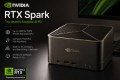
The new RTX Spark PCs utilize the N1X chip, designed by Nvidia and MediaTek, combining a CPU with AI computing hardware widely adopted by Nvidia, touted as the most efficient PC chip ever. It is expected that 30 laptops and approximately 10 desktops will incorporate this new PC chip developed by Nvidia’s graphics processing unit (GPU) division. These PCs with Nvidia CPUs will target creative professionals, AI developers, and gamers.
RTX Spark Specifications
The RTX Spark features a 20-core Grace CPU, Blackwell GPU, fifth-generation Tensor Cores, and up to 128GB of unified memory, providing up to 600GB/s bandwidth via NVLink-C2C.
Two years behind Apple
According to leaked Geekbench test data from 2025, the N1X engineering sample scored approximately 3,096 points in single-core and 18,837 points in multi-core tests.
In comparison, the Apple M3 Max scored approximately 3,128 points in single-core and 20,969 points in multi-core tests; the M5 chip achieved 4,224 points in single-core tests; and the latest M5 Max’s multi-core score is even closer to 30,000 points.
The report points out that although the N1X features 20 CPU cores, its single-core performance is roughly equivalent to the M3 series released in 2023, failing to catch up with the current M5 generation. In other words, if the final product is not significantly different from the leaked test results, Nvidia will still lag behind Apple by more than two years in terms of CPU performance.
Why was the RTX Spark destined to fail?
Use ARM processor
There are two main reasons: The RTX Spark uses an ARM processor, which is incompatible with x86, even if it uses Microsoft Windows. Based on my 30 years of experience in this industry, no Windows on ARM (WoA) PC has ever had a good ending. To reiterate, not a single one; regardless of the company.
Some might argue: Apple laptops and PCs also use Arm processors, and they still sell very well, boasting a global market share exceeding 10% and ranking as the fourth largest laptop manufacturer, surpassing ASUS and Acer. But have you grasped the point: Apple laptops and PCs use a closed system, not Windows.
Apple’s own operating system, macOS, has a wealth of applications accumulated over forty years, not significantly inferior to the Windows platform; moreover, Apple has countless loyal supporters worldwide, and these devoted users will only increase over time, not decrease.
Not affordable
The price is too high: The best hardware configuration of the RTX Spark is estimated to retail for NT$140,000, while the standard configuration costs around US$2,000 to US$3,000. Who would want to spend that much money on a PC that can’t run most Windows programs? Some might immediately counter my point: many gaming laptops are also expensive, and they still sell very well.
But have those who disagree understood that those expensive gaming laptops that sell well use x86 processors? How many of those very expensive gaming laptops (I’m referring to those above US$3,500) can you sell? Regular gaming laptops on the market aren’t necessarily more expensive than the RTX Spark. The key point is that gaming laptops, like regular laptops, can run all Windows programs.
What will become of WoA PCs?
If you are interested in WoA PCs, or AI PCs, please see my previous articles:
- “How much potential does ARM’s WOA (Windows on ARM) has?“
- “AI PC is changing the PC supply chain and ecosystem“
- “Qualcomm PC might bring it back to glory“
But RTX Spark has advantages, right?
I don’t deny that RTX Spark can run Nemotron multimodal models and AI agents, focusing on AI functionality; it may be attractive to AI workstation enthusiasts.
The problem with RTX Spark isn’t its price or features; it’s its compatibility. Look at Apple’s Apple Vision Pro. Almost everyone agrees it’s powerful and technologically advanced, but at $3499, how well did it sell?
Consider the reason why Apple’s recently launched and sensational Macbook Neo is in such high demand: its price of $499 to $599. How well did it sell? Just look at the newspapers. An entry-level laptop with all the features of the Macbook Air, compatible with all Apple operating systems and programs, and with decent performance, but with less than half the features of the Macbook Air; who wouldn’t want that?
Nvidia’s Mindset to Launch RTX Spark
This isn’t Nvidia’s first foray into personal computers, nor is it their first foray into AI-powered PCs, laptops, or tablets; the most recent example was last year (see table below). What were the results of those previous attempts? Were they any successes? What were the sales figures? I don’t need to elaborate; readers can easily find out for themselves.
Nvidia probably knows that RTX Spark won’t be profitable. But Nvidia has plenty of money, and it can afford to lose this small amount (which would be a huge sum for other small and medium-sized enterprises). What Nvidia cares about isn’t whether RTX Spark will be profitable, but rather “Nvidia’s market positioning.”
Microsoft released its AI PC specifications last year. Nvidia, the AI leader in the market, couldn’t allow this to happen. Since last year, Jensen Huang has repeatedly emphasized that “Nvidia is no longer just a chipmaker; we are a comprehensive platform provider.”
PC, laptops, and tablets Nvidia launched
| Year | Product | Type | Notes |
| 2013 | NVIDIA Shield Portable | Handheld gaming computer | Android-based portable gaming device powered by Tegra 4. |
| 2014 | NVIDIA Shield Tablet | Tablet PC | Tegra K1-powered Android tablet with optional keyboard/controller. |
| 2015 | NVIDIA Shield Tablet K1 | Tablet PC | Lower-cost refresh of Shield Tablet. |
| 2017 | NVIDIA Jetson TX2 Developer Kit | Mini desktop computer | AI/robotics development platform. |
| 2018 | NVIDIA Jetson AGX Xavier Developer Kit | Mini desktop computer | More powerful embedded AI workstation. |
| 2020 | NVIDIA Jetson Xavier NX Developer Kit | Mini desktop computer | Compact AI development PC. |
| 2022 | NVIDIA Jetson Orin Nano Developer Kit | Mini desktop computer | Entry-level AI computer. |
| 2022 | NVIDIA Jetson AGX Orin Developer Kit | Mini desktop computer | High-end edge AI workstation. |
| 2025 | NVIDIA DGX Spark | Desktop AI computer | Originally announced as Project DIGITS; ships with Grace Blackwell architecture and up to 128 GB unified memory. |
| 2025 | NVIDIA DGX Station | Desktop workstation | Larger Blackwell-based AI workstation. |
| 2026 | NVIDIA RTX Spark | Laptop & desktop PC platform | NVIDIA’s first true consumer PC processor platform, powering partner laptops and desktops from Microsoft, Dell, HP, Lenovo, ASUS, MSI, etc. |
Who will benefit?
Nvidia won’t benefit from RTX Spark’s AI PC; rather, it will benefit market speculators, MediaTek (whose stock price is rising), and Arm (which collects royalties).
They gain market exposure, see their stock price rise, and earn design fees and royalties; but if sales are poor, they won’t make a lot of money either. Only these two companies will be guaranteed to profit.
The rest, whether it’s Microsoft or laptop OEMs like Lenovo, Dell, and HP, will only end up losing money and looking humiliated.
Conclusion
The world’s first Windows product based on the ARM architecture (WoA) was the Microsoft Surface (commonly known as the Surface RT), officially announced on October 26, 2012, alongside Windows 8.
To date, no PC using ARM processors has achieved success, except from Apple. RTX Spark will likely be no exception!
RTX Spark is destined to fail. There’s no need for time to prove it; anyone with even a basic understanding of the industry or common sense knows the outcome. There’s no need to wait or look at market sales reports six months from now.
RTX Spark will only be a niche product, and investors shouldn’t have too high expectations.
Related articles
- “Nvidia RTX Spark destined to fail“
- “Arm and Qualcomm’s IP licensing lawsuit set to be settled“
- “Qualcomm PC might bring it back to glory“
- “How much potential does ARM’s WOA (Windows on ARM) has?“
- “AI PC is changing the PC supply chain and ecosystem“
- “Arm relisted successfully and it’s ushering in its best days“
- “How does the ubiquitous Arm make money?“
- “Why nVidia failed to acquire ARM?“
- “A must-read for Nvidia investors"The Thinking Machine"“
- “Portfolio of Nvidia investment empire “
- “Spectrum-X and Quantum-X switches, Nvidia’s new territory“
- “Nvidia’s new business set to grow its share price“
- “How does nVidia make money, Nvidia is changing the gaming rules“
- “The reasons for Nvidia’s monopoly and the challenges it faces“
- “Why nVidia failed to acquire ARM?“
- “Revisiting Nvidia: The Absolute Leader in Artificial Intelligence, Data Center, and Graphics“
- “Comparison of AI chips GPU and ASIC“
- “How does CUDA strengthen the moat of Nvidia’s monopoly?“
Disclaimer
- The content of this site is the author’s personal opinions and is for reference only. I am not responsible for the correctness, opinions, and immediacy of the content and information of the article. Readers must make their own judgments.
- I shall not be liable for any damages or other legal liabilities for the direct or indirect losses caused by the readers’ direct or indirect reliance on and reference to the information on this site, or all the responsibilities arising therefrom, as a result of any investment behavior.