If you are unfamiliar with Supermicro, please refer to my post of “Supermicro, a repeat offender of scandals, valuation is not justified and unsustanable, no worth for long-term holding“
Founder smuggling cast doubt future
Embroiled in Chip Smuggling Again
On March 19, 2026, Supermicro was again embroiled in chip smuggling, facing a major indictment from the U.S. Department of Justice. This time, not only is the general manager of Supermicro’s Taiwan branch and partner companies involved, but Supermicro’s co-founder is also being indicted as the mastermind.
Investors File Class Action Lawsuit
On March 25, 2026, shareholders of Supermicro filed a lawsuit accusing the company of concealing its reliance on sales to China, which they alleged violated U.S. export regulations and constituted securities fraud.
The shareholders stated that Supermicro exaggerated its business prospects and inflated its stock price, knowingly failed to disclose a significant proportion of its server sales to Chinese companies, and exhibited substantial deficiencies in its compliance with export control regulations. This lawsuit could severely damage Supermicro ‘s business.
This Could Be a death blow to Supermicro
Since its IPO, Supermicro has been plagued by negative scandals, but this chip smuggling incident could have irreparable consequences for the company’s future.
Reshape business practice
Following an export control lawsuit filed on March 19, 2026, alleging the illegal export of AI servers to foreign countries, in which the general manager of Supermicro’s Taiwan branch and partner companies were implicated, and Supermicro’s co-founder was also indicted as the mastermind, Supermicro urgently appointed an acting chief compliance officer on March 24, 2026, hoping to rebuild the company’s image and review its usual business practices in order to restore the confidence of the US government, supply chain, and investors.
Dishonorably forced to delist
Forced delisting due to financial reports delayed
Supermicro notified the Nasdaq Stock Exchange in 2018 that it could not submit its financial report as scheduled because “the company needs more time to conduct an internal review” to review the correctness of its financial reports from fiscal years 2015 to 2017. The Nasdaq transaction were forced to be delisted. The SEC therefore intervened in the investigation.
Nasdaq warns of delisting
Supermicro said on September 20, 2024, that it received a notification letter from Nasdaq stating that the company did not comply with Nasdaq Listing Rules 5250(c)(1), which requires companies to promptly report to U.S. securities exchanges. The committee submits its report. Nasdaq said: Supermicro has 60 days from the date of notification to file a Form 10-K with Nasdaq or submit a compliance plan. Failure to comply within the stipulated time will result in delisting.
Untrusted accounting and report
Accounting report manipulation
An internal audit in 2017 resulted in an amendment to the financial statements, which later led to the resignation of the company’s chief financial officer and one of its co-founders. However, it improperly beautified its accounting reports and was fined US$17.5 million by the U.S. Securities and Exchange Commission (SEC) for “premature recognition of revenue and underestimation of expenses.”
According to the SEC investigation, Supermicro not only reduced the recognition of expenses in marketing plans, but also recognized revenue in advance through a variety of improper methods, including registering goods sent to the warehouse but not yet completed as sales, and rushing to The customer agreed to previous shipments, or even the wrong goods were sent to the customer. Supermicro is suspected of violating the anti-fraud, reporting, books and records, and internal accounting controls provisions of the federal securities laws.
Short sellers accuse of accounting manipulation
On August 27, 2024, Supermicro was exposed as suspected of accounting manipulation by a report issued by Hindenburg Research, a well-known short seller. Hindenburg Research accuses the company of improper transactions with Charles Liang’s family. Hindenburg’s investigation into Supermicro on August 27 revealed that Supermicro was a repeat offender of financial fraud. After three months of investigation, “obvious accounting issues were discovered, evidence showed that multiple related party transactions were not disclosed, and government regulations were not implemented.” Sanctions and export controls, and many issues from customers.”
Bloomberg analysts said Hindenburg’s report could trigger expanded scrutiny of Supermicro’s accounting practices and customer transactions, and that while Hindenburg’s concerns were nothing new, they “could lead to an increased focus on customer relationships. Especially because the United States highly scrutinizes the sale of AI systems to sanctioned companies and countries.”
Affected by this, Supermicro’s stock price closed down 19.02% on August 28, 2024; the stock price fell 27% in two days!
Hindenburg said it was short AMD Micro. Supermicro’s convertible bonds were also dragged down by the news.
Postponement of 10-K report
On the 28th, it was announced that the submission of the annual report Form 10-K for fiscal year 2024 would be postponed. Supermicro stated that it will postpone the release of 2023’s financial report for the year ended June 30, emphasizing that it is not to update the annual report content, but that senior management needs more time to fully evaluate the design and implementation of internal financial reporting controls effectiveness.
DOJ Investigation on accounting irregularities
The Wall Street Journal reported on September 26, 2024 that Supermicro is under preliminary investigation by the U.S. Department of Justice after Supermicro was involved in “accounting irregularities.” Affected by this news, the stock price immediately plummeted by more than 13%, triggering a temporary suspension again, and the stock price closed plummeting by 12.17%.
According to reports, a former Supermicro employee reported to the authorities in September and April 2024 that Supermicro and CEO Charles Liang were suspected of violating regulations. At the end of August, short-selling agency Hindenburg Research also alleged that the company had improper transactions with Charles Liang’s family. At that time, Supermicro refuted the accusation as untrue.
Significant accounting and finances problems
Ernst & Young quits financial report auditing
On October 30, 2024, Ernst & Young, which was responsible for auditing and reviewing the company’s financial reports, resigned from the audit and questioned the company’s governance and moral integrity. Affected by this news, Super Micro Computer closed down 32.68% that day.
Rejected by the Big Four Accounting Firms
After Ernst & Young withdrew from the financial statement audit, no Big Four accounting firm wanted to get involved, a rare occurrence in the US stock market. Ultimately, Supermicro had to accept a small, independent accounting firm, BDO, to audit its financial statements.
Unable to Find a CFO
In late 2024, the sudden resignation of Ernst & Young, the aforementioned auditing firm, revealed significant vulnerabilities in internal controls and governance. Following the investigation, the board demanded an immediate search for a new CFO to replace David Weigand, who had held the position since 2021. However, 14 months later, Weigand remained in his position, and the company did not provide any updates on the progress of the search for a new CFO during this period.
In February 2026, the headhunting firm stated that the main reason was the “potential career ruin,” since no second-in-command of a listed company would want to be associated with a company that has repeatedly run into problems.
A repeat offender of scandals
Illegally Transporting AI Chips to China
Following accounting allegations in 2024, on March 19, 2026, Supermicro co-founder Yih-Shyan “Wally” Liaw, Taiwan branch general manager Ruei-Tsang “Steven” Chang, and contractor Ting-Wei “Willy” Sun were indicted by the U.S. Department of Justice for allegedly illegally transferring billions of dollars worth of AI technology to mainland China, violating U.S. export control regulations.
The indictment states that starting in 2024, the three defendants facilitated the sale of $2.5 billion worth of servers by Supermicro to a Southeast Asian company, with mainland Chinese customers receiving Supermicro’s “flagship” products in unlabeled boxes. The servers were assembled in the United States, shipped to AMD’s facilities in Taiwan, and then handed over to Southeast Asian companies. They were then transshipped to mainland China buyers through third-party intermediaries.
Affected by this case, the company’s stock price plummeted 33.32% the following day.
Was involved in the spy chip case
In October 2018, a report in Bloomberg Businessweek claimed that some of Supermicro’s server motherboards were manufactured by China with spy chips disguised as ceramic-encapsulated balun filters implanted in them. Affected by this, major data centers were in an uproar, and Supermicro’s stock price plummeted 40%.
Investigated by SEC
After resuming listing in 2020, Supermicro settled the investigation into its accounting disclosures from 2014 to 2017 with the U.S. Securities and Exchange Commission (SEC) by amending its financial reports and paying fines. At that time, it also promised that such violations would not happen again.
Lax supervision and governance
Management team fined
According to the relevant settlement agreement, Charles Liang himself is still required to return to the company the US$2.1 million in stock profits he received during the improper accounting period. Former CFO Howard Hideshima was fined $50,000 for improper accounting practices and had to repay $300,000 in illegal profits and interest.
However, the company did not improve the company’s situation afterwards, and the staff involved later returned to their original positions.
Co-founder Repeatedly Involved in Scandals
The aforementioned chip smuggling case in March 2026 involved Yih-Shyan “Wally” Liaw, co-founder of Supermicro. Liaw, who had previously left the company due to financial problems but later returned, is now embroiled in controversy again, deepening market concerns.
Questionable Business Practice
In the aforementioned chip smuggling case in March 2026, Ruei-Tsang “Steven” Chang, the general manager of the Taiwan branch, facilitated the arrangement of “friendly” auditors to evade inspection. Contractor Ting-Wei “Willy” Sun used a Southeast Asian company as an intermediary to forge documents to conceal the final destination and arranged for logistics to repackage the equipment to evade supervision.
Severely Damaging Company Reputation
The chip smuggling case in March 2026 proves once again that Supermicro is a company that disregards its reputation, ignores its corporate image, and repeatedly skirts the edge of the law. This case will certainly shake up supply chain relationships, especially affecting cooperation with Nvidia, cloud service providers, and US customers who are highly sensitive to compliance.

Conclusion
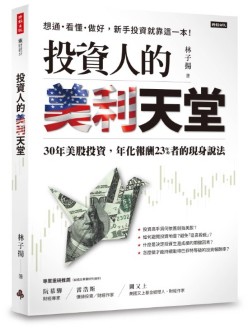
Besides my post of “Supermicro, a repeat offender of scandals, valuation is not justified and unsustanable, no worth for long-term holding” I also used this company as an example in my third book, “Investors Beautiful Heaven”, to remind investors to stay away from companies with a history of repeated scandals and poor operating records, for safety’s sake.
Related articles
- “Supermicro Founder smuggling cast doubt future“
- “Supermicro, a repeat offender of scandals, valuation is not justified and unsustanable, no worth for long-term holding“
- “Seagate comeback thanks to AI, No 1 S&P 500 perform stocks YTD“
- “How GPU farms CoreWeave make money?“
- “How does Applied Digital make money?“
- “DeepSeek routed the global AI and stock“
- “Chinese AI progress and top companies“
- “How Vertiv, share price return 2.5 times of Nvidia, make money?“
- “AI PC is changing the PC supply chain and ecosystem“
- “Artificial intelligence benefits industries“
- “Why did US largest electricity Vistra, a turned around company, share return higher than Nvidia?“
- “How does the resurrected Dell make money?“
- “HPE expertizes on enterprise technology services“
- “Is Buffett no longer hold for long haul? TSMC, HP, and US Bancorp cases study“
- “The commonalities of Buffett portfolio – cheap, fixed income, repurchase“
- “How does HP make money? The pros and cons of investing in HP“
- “How does IBM make money? What’s next?“
- “Negative message is part of investment“
- “Why did US largest electricity Vistra, a turned around company, share return higher than Nvidia?“
- “A investor can be sustained or not? how to verify?“
- “Sustainability matters in stock market investing“
- “The reasons for Nvidia’s monopoly and the challenges it faces“
- “How does the all-powerful Huawei make money?“
- “Major artificial intelligence companies in US stocks market“
- “The artificial intelligence bubble in the capital market is forming“
- “How does nVidia make money, Nvidia is changing the gaming rules“
- “Why nVidia failed to acquire ARM?“
- “Revisiting Nvidia: The Absolute Leader in Artificial Intelligence, Data Center, and Graphics“
- “Data center, a rapidly growing semiconductor field“
- “OpenAI, the Generative Artificial Intelligence rising star and ChatGPT“
- “Artificial intelligence investment trap“
- “Will Intel go bankrupt?“
- “How does Intel make money? and the benefits to invest in it“
- “Intel’s current difficult dilemma“
- “How AMD makes money? A rare case of turning defeat into victory“
- “Why is AMD’s performance so jaw-dropping?“
Disclaimer
- The content of this site is the author’s personal opinions and is for reference only. I am not responsible for the correctness, opinions, and immediacy of the content and information of the article. Readers must make their own judgments.
- I shall not be liable for any damages or other legal liabilities for the direct or indirect losses caused by the readers’ direct or indirect reliance on and reference to the information on this site, or all the responsibilities arising therefrom, as a result of any investment behavior.