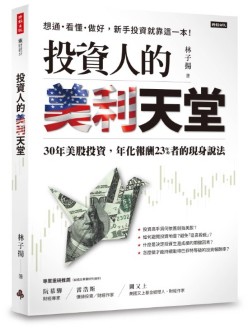
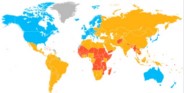
What is a developing country?
Generally speaking, compared with developed countries, developing countries refer to countries with a lower level of economic and social development.
Market size
According to data from fund research organization Morningstar Direct, there are currently 169 ETFs on developing country stocks available for fund investors to invest in, with total assets of approximately US$296 billion.
The main reason to invest in developing country ETFs is to gain exposure to high-growth markets with rapidly growing middle-class consumers in China, India, Mexico, Taiwan, South Korea and Vietnam. Developing countries have a population of more than 4.3 billion, and their economic output accounts for about half of global GDP.
Market return in developing countries and major countries
| Country | Country’s large-cap index | Country’s average GDP growth (2013-2021) | Stock market returns in past 10 years | Stock market returns in past 20 years | Stock market returns in past 30 years |
| U.S. | S&P 500 index | 2.027% | 125.35% | 298.40% | 893.56% |
| China | Shanghai Composite Index | 6.556% | 57.15% | 123.93% | 355.73% |
| Japan | Nikkei Index | 0.473% | 117.92% | 185.37% | 61.05% |
| Hong Kong | Seng Index | 1.701% | -20.26% | 51.45% | 119.14% |
| India | Bombay Sensitive 30 Index | 5.622% | 156.81% | 1221.29% | 1486.42% |
| U.K. | FTSE 100 Index | 1.488% | 8.00% | 65.91% | 134.01% |
| Germany | DAX index | 1.122% | 59.99% | 299.84% | 666.27% |
| France | CAC 40 index | 1.026% | 64.24% | 95.19% | 272.79% |
| South Korea | Korea Composite Index | 3.057% | 26.00% | 237.24% | 32.51% |
| Taiwan | Taiwan Weighted Index | 3.293% | 75.48% | 188.23% | 146.73% |
| Singapore | Straits Times Index | 3.131% | -6.41% | 52.43% | 40.62% |
| Brazil | Brazil Index | 0.156% | 107.81% | 190.06% | 599.81% |
| Indonesia | Jakarta Composite Index | 4.151% | 33.96% | 784.34% | 1388.51% |
| Vietnam | Ho Chi Minh Stock Market Index | 5.829% | 94.22% | 366.47% | 1031.48% |
Table 1 – The performance of the world’s major stock markets in the past 30 years (backed by 7/9/2023, the stock market data comes from Google Finance and Yahoo Finance, and the stock market data of some developing countries that have not reached 30 years are expressed in 30 years; the GDP data comes from IMF)
Advantages of investing in developing countries
Developing countries are growing faster than developed countries, and this trend is not expected to change in the short term. The International Monetary Fund (IMF) predicts that real GDP in developed countries will grow by only 1.4% in 2024, due to inflation, monetary policy and other factors. In contrast, the IMF forecasts that real GDP growth in developing countries and developing economies will grow by 4.1% in 2024, led by countries such as India, which is projected to grow by 6.3%.
Another incentive is the lower valuations of stocks in developing countries. Based on earnings for the past 12 months ended July 31, the S&P 500 traded at 22.4 times earnings and 14.13 times earnings for the MSCI Emerging Market Index, which includes 25 countries. Stocks of the most liquid mid- to large-cap companies in developing countries.
Disadvantages of investing in developing countries
Developing country stock ETFs are more volatile than global ETFs that focus on developed country stocks. Over the past 10 years to July 31, 2023, the standard deviation of the MSCI Developing Countries Index was 16.2% higher than that of the MSCI World Index, which represents developed country stocks around the world.
This happens because any sudden geopolitical event (such as the war in Ukraine) or any economic shock (such as a surge in inflation or a disruption in global supply chains) can ripple through countries that depend on commodity exports, tourism, and the health of advanced economies. Developing market economies.
Stocks in developing countries also face risks from government influence and regulation. For example, the government may decide at any time to nationalize an industry or impose controls on an industry.
Exchange rate changes are another risk factor that investors need to consider.
Well-known developing country ETFs
- MSCI Emerging Market Index: A developing country market index compiled by MSCI.
- iShares Core MSCI Emerging Markets ETF (ticker: IEMG): invests in a basket of emerging market countries around the world, with an asset size of US$72.1 billion.
- Franklin FTSE Latin America ETF (ticker: FLLA): invests in medium and large listed companies in Brazil, Chile, Colombia and Mexico, with an asset size of US$64.2 million.
- iShares MSCI Emerging Markets ex-China (ticker: EMXC). The fund’s main holdings are TSMC (ticker: TSM) and Samsung Electronics; its asset size is US$5.16 billion.
- Franklin FTSE Taiwan ETF (ticker: FLTW) invests in medium and large listed companies in Taiwan, with an asset size of US$175.8 million.
- VanEck Brazil Small-Cap ETF (BRF): It invests in small-cap stocks and has an asset size of US$34.2 million.
According to Morningstar Direct data, as of August 29, the best-performing emerging market ETFs this year were VanEck Brazil Small-Cap ETF, SPDR S&P Emerging Market Dividend ETF (ticker EDIV) and iShares MSCI Brazil Small-Cap ETF (ticker: EWZS), which is up 24.1% year to date and 5.7% over the past year.
Relative articles
- “The pros and cons of investing in developing countries“
- “Why emerging market stock with high economic growth is not as rewarding as developed countries?“
- “High growth country generally have poor stock returns“
- “Global stock markets performance comparision over the past 30 years in a table“
- “Why are only US stocks the most valuable for long-term investment?“
- “India stock tripled in three years to US$3.56 trillion, ranking fourth in the world“
- “Booming India stock market and the emerging Indian tech giants“
- “Indians do well in the US, India’s weak and uncompetitive industries“
- “Japan is already a country of mediocrity, not as advanced as you think“
- “South Korea’s emerging technology giant“
- “Israel stock market and tech giants“
- “Will Sino-US confrontation, de-globalization, and de-dollarization affect the long-term investment value of US stocks?“
- “The relationship between GDP and stock prices“
- “US Gross domestic product (GDP) querier“
- “The hardware and software gap between China and US, is all China-made software and hardware possible?“
- “S&P 500 index, the only stock worth holding forever“
- “Querier to Annualized rate of return for S&P 500 Index“
- “How investors should look at economic trends and forecasts?“
- “Should investors care about currency exchange risk when investing in US stocks?“
- “Tax, inflation and rate are the top three serious killers to investors“
Disclaimer
- The content of this site is the author’s personal opinions and is for reference only. I am not responsible for the correctness, opinions, and immediacy of the content and information of the article. Readers must make their own judgments.
- I shall not be liable for any damages or other legal liabilities for the direct or indirect losses caused by the readers’ direct or indirect reliance on and reference to the information on this site, or all the responsibilities arising therefrom, as a result of any investment behavior.